




FAQ for Landscape Lighting Transformer
What is a low voltage transformer?
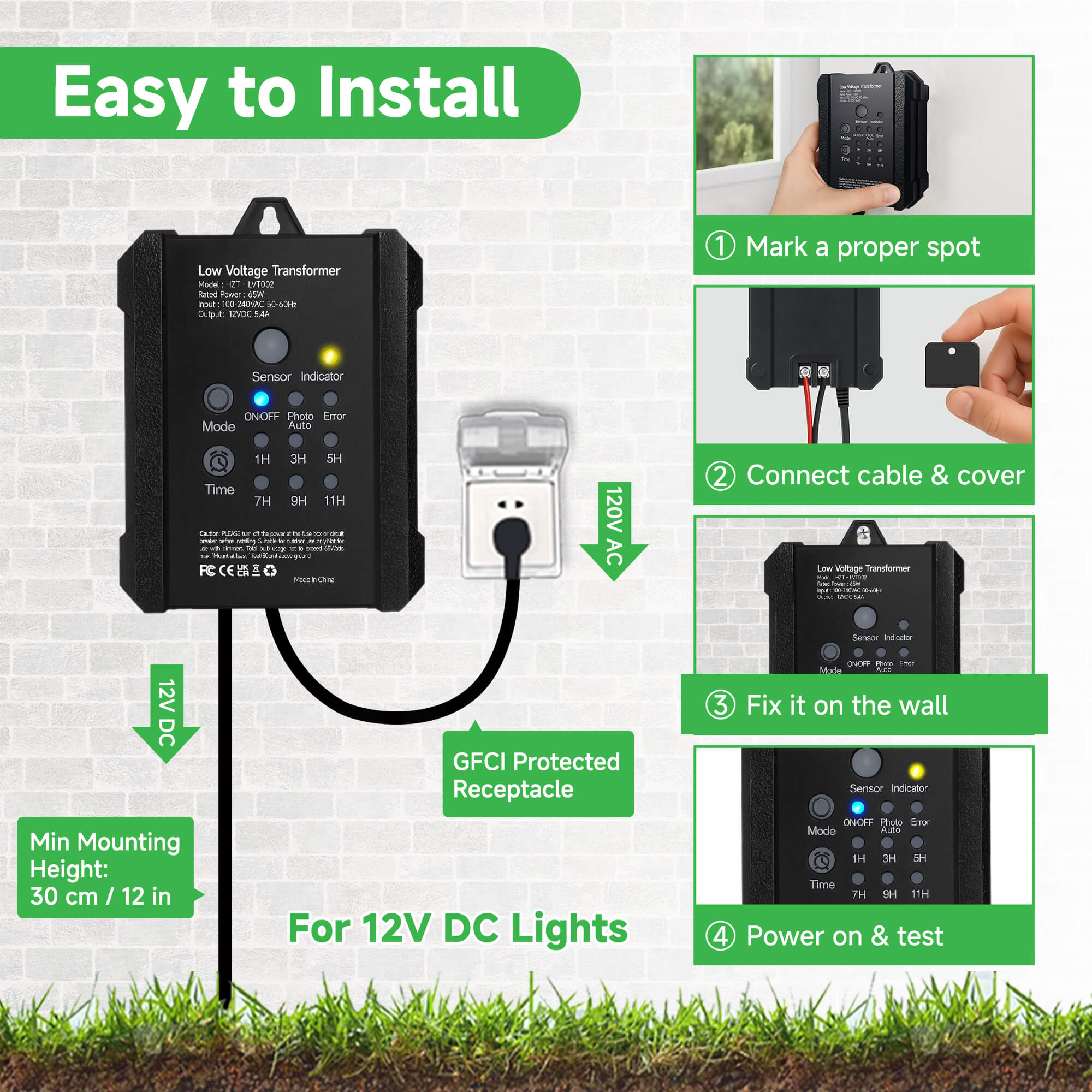
A low voltage transformer is an electrical device that converts high voltage into lower voltage. Its main purpose is to convert high voltage power sources (such as 110V or 220V) into a lower and safer voltage (such as 12V or 24V) that is suitable for use. 120V to 12V transformers are designed to provide stable voltage output and have advantages in terms of safety and efficiency.
What devices require a low voltage transformer?
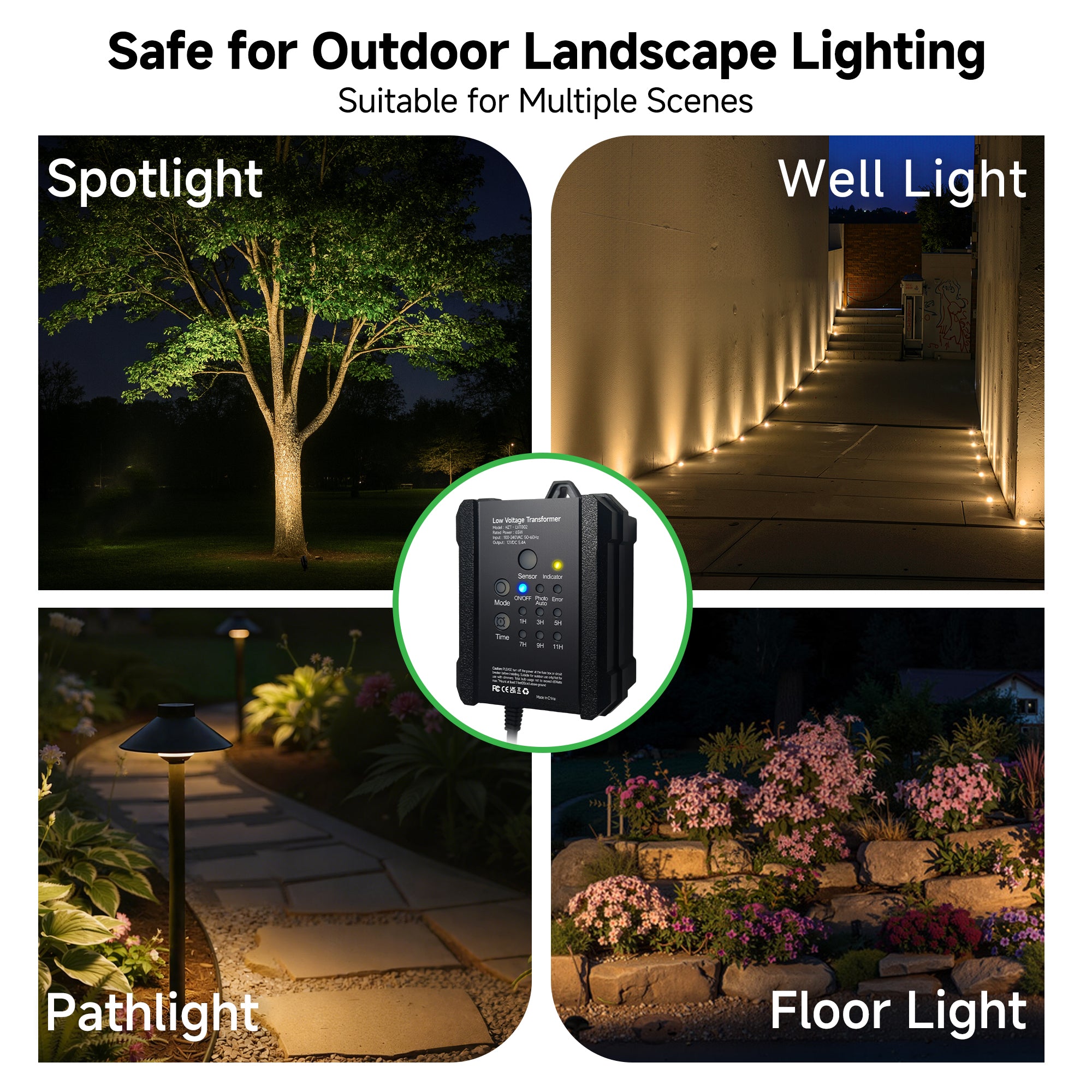
12V transformers are commonly used to provide power to low voltage equipment or systems, such as low voltage lighting systems, audio devices, and communication equipment. In outdoor landscape lighting systems, 12 to 120 volt transformers are typically used to convert grid voltage to a voltage suitable for low voltage garden lighting fixtures, ensuring their proper operation and safety. For instance, outdoor landscape lighting fixtures such as spotlights, pathway lights, well lights, and garden lights from Varmtalys require the use of low-voltage cables and need to be connected to a low-voltage transformer.
How big of a low voltage transformer do I need?
- The wattage of the low voltage lighting transformer you need depends on the total wattage of the outdoor landscape lighting fixtures you plan to connect.
- A proper load rate can ensure that the transformer operates within its normal working range and prolong its lifespan. Therefore, it is recommended not to exceed 80% of the transformer's capacity.
- If you plan to connect more lighting fixtures in the future, you may consider purchasing a transformer with a higher capacity.
For example, if you have 20 spotlights, each with a 5W bulb, the total wattage is 100W, so you would need to purchase a 150 watt transformer.
How many more lights can be put on old low voltage transformer?
- You need to first calculate the total wattage of all the light fixtures currently installed on the transformer.
- A proper load rate ensures that the transformer operates within its normal working range and extends its lifespan. Therefore, it is recommended not to exceed 80% of the transformer's capacity.
- Subtract the total wattage already used from 80% of the transformer's capacity to determine the remaining capacity.
- Ultimately, it depends on the wattage of the new light fixtures being installed. For example, if the remaining capacity is 100W and the wattage of the new light fixture is 5W, you can install up to 20 light fixtures.
What size transformer should I choose?
Depends on the power of the transformer and the bulbs, while the electrical energy will inevitably lose 20% of the voltage during transmission.
For example, if the transformer is 150W and each bulb is 5W, then 24 fixtures can be installed (150 x 80% ÷ 5).